

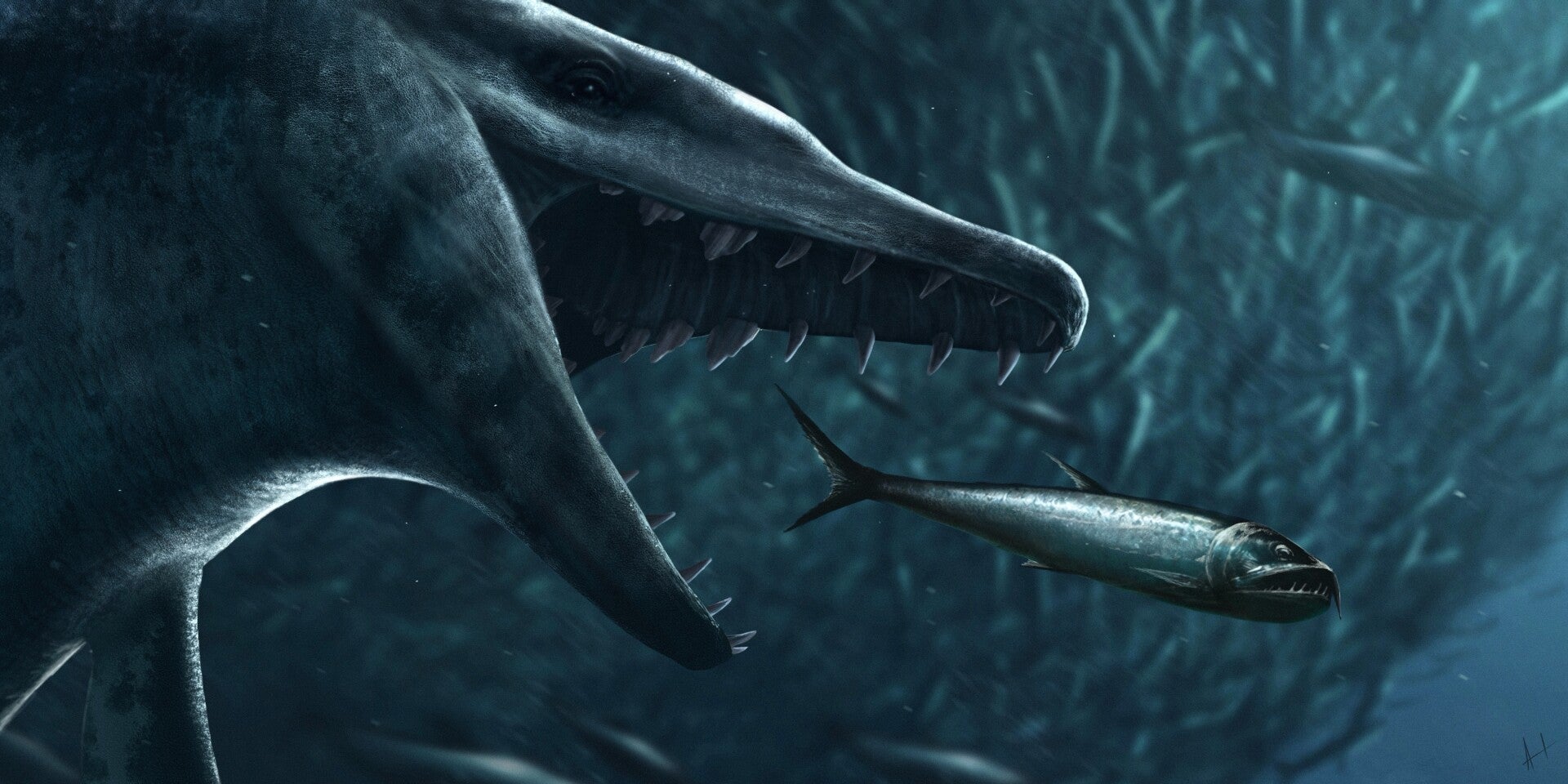
Around 38 million years ago, during the Late Eocene, the landscape of modern-day eastern Poland looked nothing like it does today. Instead of forests, fields, and towns, a warm, shallow sea stretched across much of the region, forming part of a vast marine environment that covered large areas of Central Europe. These waters were home to a rich variety of marine life, including fish, sharks, and some of the earliest fully aquatic whales. Evidence of this prehistoric world was uncovered near the town of Lubartów, where researchers discovered a fragment of the left lower jaw belonging to an ancient whale. Although only a small piece of bone was preserved, the find proved to be one of the most important paleontological discoveries ever made in Poland.
Detailed analysis of the jaw revealed distinctive tooth sockets and muscle attachment sites, allowing scientists to identify the specimen as a primitive whale that lived approximately 38 million years ago.
Based on the preserved remains, researchers estimate that the animal measured between 1.7 and 2.1 meters in length, making it roughly the size of a modern dolphin.
Unlike today's giant whales, this species was probably a small, agile predator that hunted fish and other marine animals in the shallow coastal waters of the ancient sea.
The discovery is especially significant because it represents the oldest known whale fossil ever found in Poland and the first confirmed evidence of Eocene whales inhabiting the region. For many years, Poland remained a blank spot on the map of early whale discoveries in Central and Eastern Europe. The Lubartów specimen demonstrates that ancient whales were already widespread across the seas that once connected different parts of Europe, expanding our understanding of their distribution and evolution.
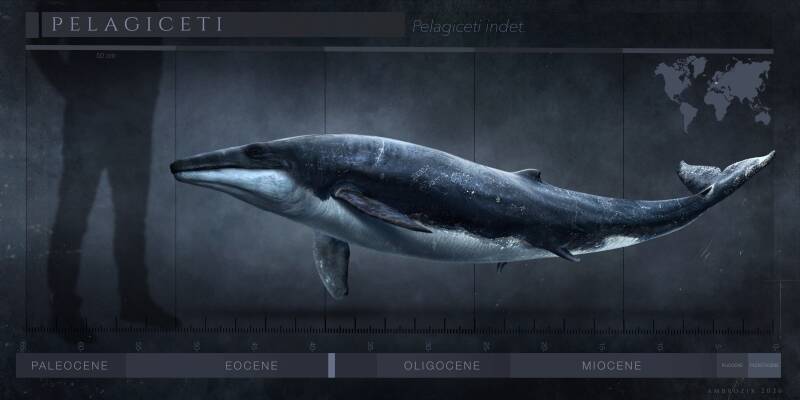
This whale lived during a remarkable period in Earth's history, when global temperatures were warmer than today and permanent polar ice caps had not yet formed. The seas covering present-day Poland supported diverse ecosystems filled with marine predators and prey.
Although only a fragment of its jaw survived, the Lubartów whale offers a rare glimpse into that lost world and helps scientists reconstruct the early evolutionary history of whales, the descendants of land mammals that successfully adapted to life in the oceans.
Today, this small fossil serves as a powerful reminder that millions of years before humans appeared, the waters above what is now Poland were inhabited by ancient whales swimming through a tropical sea.